Commercial properties lose water differently than homes do, and in larger amounts. A leaking fire-suppression loop, a failed irrigation zone, a cooling line under a parking structure, or a slow underground main can waste thousands of gallons before anyone notices, because no single tenant sees the whole bill. The property manager just sees a number that keeps climbing.
A commercial water loss survey is a systematic investigation: consumption analysis, zone-by-zone isolation, and multi-technology leak detection across every water system on the property, followed by a written report with marked locations and documentation suitable for owners, boards, and insurers.
Last updated: October 13, 2026
Signs Your Property Needs a Water Loss Survey
The building's water bill climbs with no change in occupancy or use
Submeters or irrigation meters show usage that doesn't add up
Wet areas, sinkholes, or lush patches appear on the grounds
Tenants report low pressure, running-water sounds, or damp spots
A fire-suppression or irrigation loop needs frequent refilling
The HOA or ownership wants a documented water audit of the property
Where Commercial Properties Lose Water
The usual suspects on commercial sites are rarely the fixtures. Underground supply mains running between buildings, fire-suppression loops that are pressurized 24/7 and rarely inspected, irrigation systems with broken heads or cracked laterals running on timers nobody audits, cooling and HVAC lines, pool and fountain plumbing, and piping under parking structures and loading areas, all out of sight, all capable of leaking for months.
A survey treats the property as a set of systems to be tested independently rather than one mystery to be guessed at. That system-by-system discipline is what separates a professional survey from a plumber walking the grounds with a listening stick.
What a Professional Survey Includes
Direct answer: A commercial water loss survey is a systematic check of a whole property for hidden water loss. It starts with meter and bill records, then isolates zones, pressure-tests suspect lines, and uses acoustic, thermal, and camera tools to pinpoint each leak. The survey ends with documented findings per zone, so managers can plan repairs by priority instead of guessing.
Where commercial properties lose water
Area
Common loss source
Survey method
Irrigation
Stuck valves, broken heads, underground laterals
Zone isolation plus acoustic sweep
Restrooms
Running toilets, failed flush valves
Fixture checks plus meter readings
Cooling and mechanical rooms
Condensate and cooling lines
Meter logging plus thermal scan
Kitchens and laundries
Supply lines, ice makers, dishwashers
Zone isolation plus acoustic listening
Underground mains
Service-line breaks between meter and building
Pressure testing plus line tracing
Fire suppression loops
Slow seepage at joints
Pressure testing plus documentation
Every survey follows the same architecture: consultation and consumption review, billing history, meter layout, known problem areas; zone isolation, valving off systems one by one (irrigation, fire loop, building supply, pool) and watching the meters to identify which zone is losing water; multi-technology detection on the losing zone, acoustic listening, tracer gas, correlators, and pressure logging as the situation demands; marking of each confirmed leak on the surface; and a written report with findings, locations, photos, and readings.
The report is a working document: it tells your board or ownership what was found, where, and what kind of repair each item needs, suitable for budgeting, bidding, and insurance files alike.
Built Around Your Operations
The number-one concern facility managers raise is disruption, and it is a fair one. Detection work is non-invasive by design: listening equipment on the surface, meters on existing valves, cameras through existing access points. Most survey work happens without shutting down tenants, closing areas, or interrupting business.
Where a brief isolation is needed, valving off an irrigation zone for an hour, for example, it is scheduled around your operations, not ours. After-hours and phased work can be arranged for properties that can't pause during the day. The goal is answers with the smallest possible footprint on your daily operations.
For Property Managers, HOAs, and Facility Teams
If you manage the property, you need more than a leak found, you need a defensible record. The survey report documents methodology, readings, and marked locations in terms a board, an owner, or an adjuster can follow: which zones were tested, what each test showed, and where each confirmed leak sits.
That documentation supports repair bidding (contractors quote from the map, not from a walk-through), reserve planning (you know the pipe's condition, not just today's leak), and insurance files (a professional report carries weight that a work order doesn't). For HOAs facing rising common-area water costs, a survey is often the fastest route from suspicion to an actionable plan.
Our Commercial Water Loss Surveys Process
Consumption review
We analyze billing history and meter layout with your team to understand the loss pattern and prioritize zones.
Zone isolation
Systems are valved off one by one, irrigation, fire loop, building supply, and meters watched to find the losing zone.
Targeted detection
Acoustic, tracer gas, and pressure-logging methods pinpoint leaks within the confirmed zone.
Surface marking
Each confirmed leak is marked on the surface with its system and approximate depth noted.
Written report
You receive a documented report, methodology, readings, locations, photos, ready for boards, bids, and files.
How pinpointing changes the job: 5 illustrative examples
The examples below are illustrative. They show how pinpointing typically changes a job. They are not reports of specific customer jobs, and they name no customer, address, date, or price.
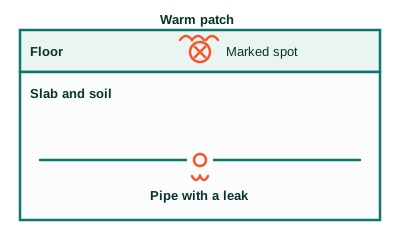
1. A warm spot on the floor
Illustration: Slab cross-section with one marked spot
Before: A homeowner notices one warm patch on the floor and a bill that keeps climbing, but no visible water. Without instruments, the only way to find the leak would be to open large areas of flooring and guess.
Method: The technician checks the meter, isolates the hot-water line, then combines thermal imaging with acoustic listening to follow the heat and sound to one point.
After: The leak is marked on the floor at one spot. Any repair opens that spot only, and the rest of the floor stays intact.
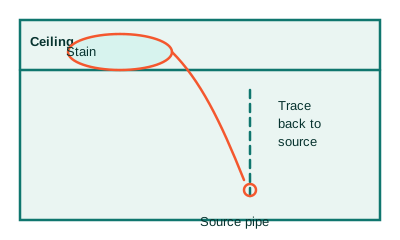
2. A stain on the ceiling
Illustration: Ceiling stain traced back to its source line
Before: A brown stain spreads across a ceiling, but the pipe above it may run several feet away. Opening the ceiling at the stain alone often misses the source and means opening more drywall later.
Method: The technician maps the damp area with thermal imaging and moisture readings, then checks pressure and nearby lines to trace the water back to its source.
After: The source line is identified and marked. Any opening is made where the leak actually is, not where the stain happens to show.
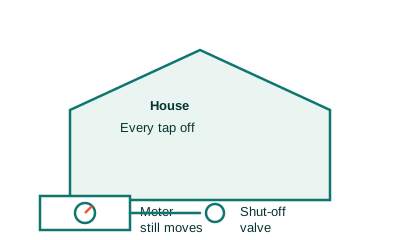
3. A meter that moves with everything off
Illustration: Meter test with every tap off
Before: Every tap is off, yet the water meter still moves. That proves water is leaving the system somewhere, but it says nothing about where. Digging or opening walls at this point would be pure guesswork.
Method: The technician runs a timed meter test, then isolates lines one by one with pressure checks to narrow the loss to a single line.
After: The search area shrinks from the whole property to one line. Pinpointing then focuses on that line only, before anything is opened.
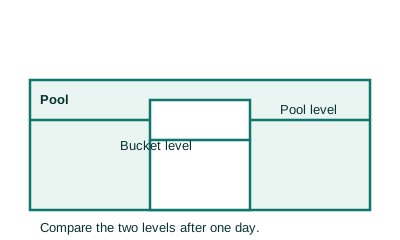
4. A pool that keeps losing water
Illustration: Bucket test comparing pool and bucket levels
Before: A pool loses water faster than normal, but some loss is normal evaporation. Draining the pool or digging up pipes without a test would waste water and money.
Method: The technician runs a bucket test to separate evaporation from a real leak, then pressure tests each line on its own to find which line loses pressure.
After: If the pool is only evaporating, no repair is needed. If one line fails, the search narrows to that line instead of the whole pool system.
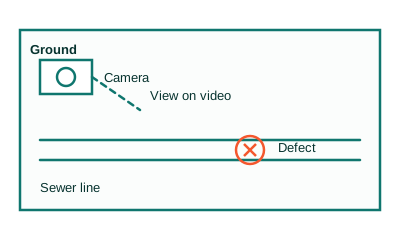
5. Slow drains and a sewer odor
Illustration: Camera inspection showing a defect inside the line
Before: Drains run slow and a sewer odor lingers, but the blockage or break could sit anywhere along the line. Digging to find it would disturb the yard and still might miss the defect.
Method: The technician sends a camera through an existing access point and watches the inside of the line on video, marking where roots, cracks, or offsets appear.
After: The defect is seen on video and its position is known. Any digging happens at that one place, after the cause is already clear.
Frequently Asked Questions
What's included in a commercial leak detection survey?
Consultation and billing review, zone-by-zone isolation testing across all water systems, multi-technology detection on the losing zones, surface marking of confirmed leaks, and a written report with photos and readings, documentation suitable for owners, boards, and insurers.
Which commercial systems can you check?
Building supply mains, fire-suppression loops, irrigation systems, HVAC and cooling lines, pools and fountains, and piping under parking structures and paved areas, essentially every pressurized water system on the property.
Can you survey without shutting down our business?
In most cases, yes. Detection is non-invasive, surface listening, existing valves, existing access points. Where brief isolation is needed, it is scheduled around your operations, and phased or after-hours work can be arranged.
Do you provide documentation for insurance or ownership?
Yes, the written report is designed for exactly that: methodology, meter readings, marked leak locations, and photos, in terms a board, owner, or adjuster can follow and act on.
What equipment do you use?
Acoustic ground microphones and correlators, tracer gas systems, pressure data loggers, and pipe locators, selected per zone based on pipe material, depth, and site conditions rather than a one-tool approach.
Can you find leaks under parking lots or concrete?
Yes. Acoustic and tracer gas methods are designed for exactly these conditions, the equipment works through paving and concrete, and findings are marked on the surface for targeted repair access.