A slab leak is a leak in the water lines running beneath or through your home's concrete foundation. Because the pipes are buried in concrete and soil, the water has nowhere visible to go, it seeps into the ground below, wicks up into flooring, or follows the path of least resistance to somewhere unexpected. By the time you notice, it may have been running for months.
This is the highest-urgency leak call we receive, and Alhambra generates more than its share: post-war ranch homes on slab foundations, copper and galvanized lines now decades past their prime, hard water, and tree roots all converge here. Slab leak detection locates the breach precisely so any repair opens a single targeted area, not a trench across your living room.
Last updated: October 13, 2026
Warning Signs of a Slab Leak
A warm or hot spot on the floor, classic sign of a hot-water line leak
The sound of running water when every fixture and appliance is off
A water bill spike with no change in household usage
Damp carpet, warped flooring, or mildew along the base of walls
Unexplained low water pressure throughout the house
Cracks in walls or flooring, or a musty smell that won't clear
Pressure-Side vs. Drain-Side: Two Different Leaks
Direct answer: A slab leak is a leak in a water or drain line running beneath or inside a concrete foundation. Pressure-side leaks come from supply lines and run constantly, while drain-side leaks come from wastewater lines and appear only when fixtures drain. Telling the two apart matters, because each is found with different tests and repaired differently.
Slab leak signs: pressure-side or drain-side?
Warning sign
More likely side
First check
Warm spot on the floor
Pressure side, hot-water line
Thermal scan
Sound of running water, nothing running
Pressure side
Meter test, then acoustic listening
Damp flooring or mildew near baseboards
Either side
Moisture readings, then line isolation
Bill climbs steadily
Pressure side
Two-hour meter test
Dampness after fixtures drain
Drain side
Camera inspection of the drain line
Cracks near wall bases
Either side, longer-running leak
Moisture mapping, then pinpointing
Not all slab leaks behave the same. A pressure-side leak is in a pressurized supply line, hot or cold, and it leaks continuously, 24 hours a day, whether you are using water or not. These are the leaks that run up shocking water bills and erode soil beneath the foundation.
A drain-side leak is in a wastewater line under the slab and only leaks when fixtures drain into it. It is sneakier: no bill spike, no constant sound, just slow, intermittent moisture feeding mold and undermining the slab edge. The detection approach differs for each, which is why the first step is always determining which side you are dealing with.
What Causes Slab Leaks in Alhambra
The causes read like a description of Alhambra's housing stock. Aging pipes: galvanized steel from the 1930s–60s corrodes from the inside out; copper from the 1960s onward develops pinhole leaks. Hard water accelerates that corrosion. Tree roots seek out moisture and can wrap, shift, or penetrate buried lines. High water pressure stresses joints and weak spots, and soil movement, including minor seismic shifting, flexes rigid pipe until it cracks.
None of these announce themselves early. A pinhole leak under six inches of concrete makes no visible sign for weeks or months while it quietly saturates the soil below. That delay is exactly why slab leaks cause disproportionate damage relative to their size.
Located Without Tearing Up Your Floor
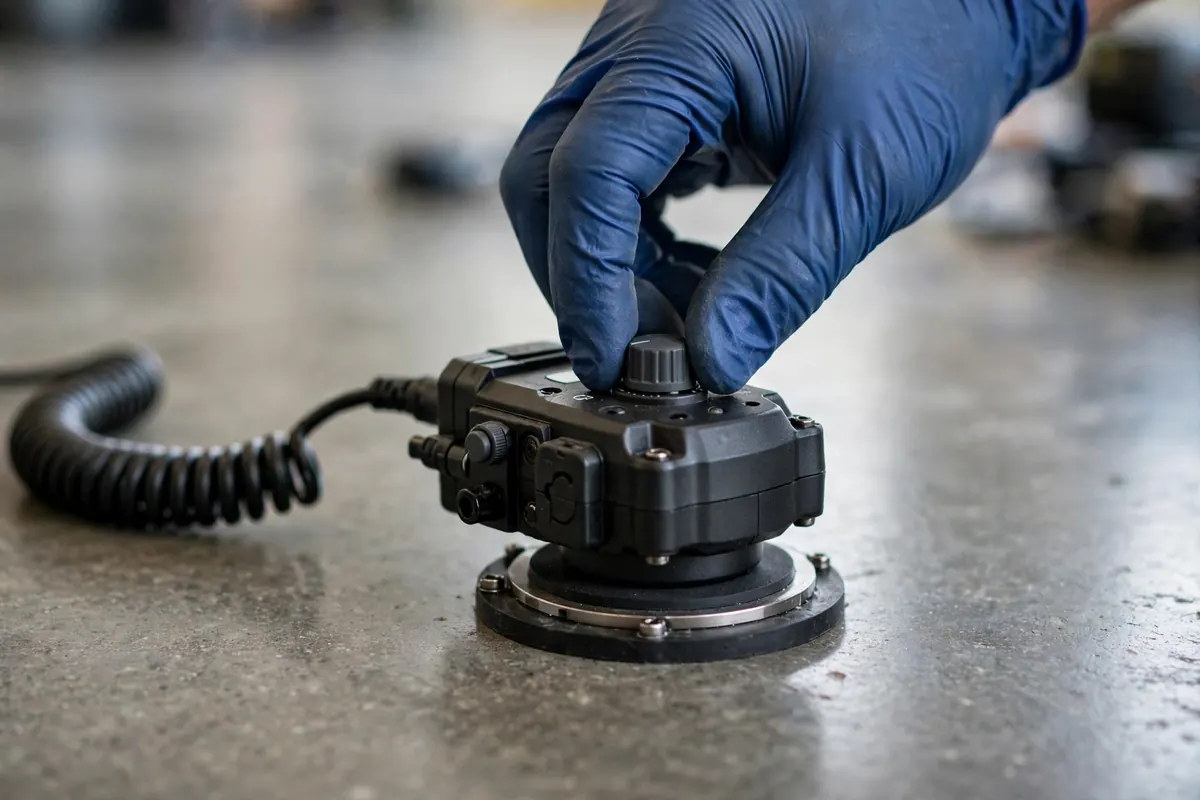
Modern slab leak detection is a disciplined sequence, not a jackhammer. It starts with a water-meter check to confirm water is actually escaping. Then pressure testing isolates the loss, hot side or cold side, supply or drain. Then acoustic listening sweeps the floor: sound travels exceptionally well through concrete, making this the primary pinpoint method for pressurized slab lines. Thermal imaging confirms, especially for hot-water leaks that paint a warm trail across the slab.
For the smallest pinholes where acoustic falls short, tracer gas finishes the job. The result is a marked spot on your floor, often within inches, so any repair opens one precise location.
What to Do If You Suspect a Slab Leak
Act quickly but calmly. Shut off your main water valve to stop the ongoing loss, this alone can prevent thousands in additional damage. Document what you see: photograph the warm spot, the damp area, the meter reading. Note when you first noticed each symptom; the timeline helps the technician.
Then call for detection before calling for repair. Knowing the leak's exact position first means the repair, whether it is a direct fix, a reroute, or another approach you discuss with your plumber, starts from evidence. Detection first, demolition never.
Our Slab Leak Detection Process
Meter confirmation
A no-use meter test confirms water is escaping the system and roughly how much.
Hot vs. cold isolation
Pressure testing determines whether the loss is on the hot-water loop, the cold supply, or a drain line.
Acoustic sweep
Electronic listening sweeps the slab, following the leak's sound to its loudest point above the breach.
Thermal confirmation
Infrared imaging verifies the finding, especially telling for hot-line leaks, before anything is marked.
Mark and document
The location is marked on the floor and documented with the line type, so repair opens one precise spot.
How pinpointing changes the job: 5 illustrative examples
The examples below are illustrative. They show how pinpointing typically changes a job. They are not reports of specific customer jobs, and they name no customer, address, date, or price.
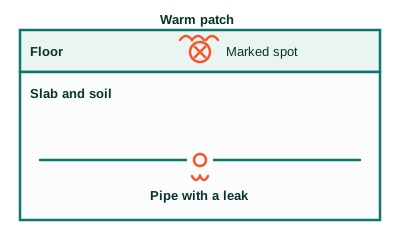
1. A warm spot on the floor
Illustration: Slab cross-section with one marked spot
Before: A homeowner notices one warm patch on the floor and a bill that keeps climbing, but no visible water. Without instruments, the only way to find the leak would be to open large areas of flooring and guess.
Method: The technician checks the meter, isolates the hot-water line, then combines thermal imaging with acoustic listening to follow the heat and sound to one point.
After: The leak is marked on the floor at one spot. Any repair opens that spot only, and the rest of the floor stays intact.
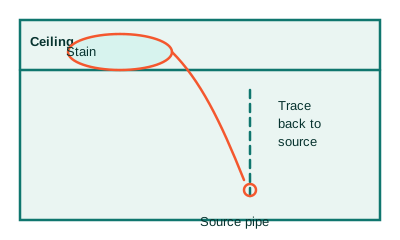
2. A stain on the ceiling
Illustration: Ceiling stain traced back to its source line
Before: A brown stain spreads across a ceiling, but the pipe above it may run several feet away. Opening the ceiling at the stain alone often misses the source and means opening more drywall later.
Method: The technician maps the damp area with thermal imaging and moisture readings, then checks pressure and nearby lines to trace the water back to its source.
After: The source line is identified and marked. Any opening is made where the leak actually is, not where the stain happens to show.
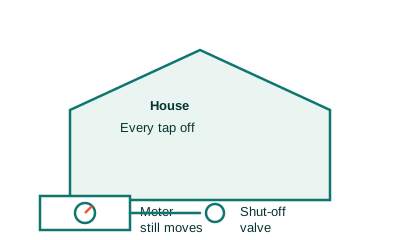
3. A meter that moves with everything off
Illustration: Meter test with every tap off
Before: Every tap is off, yet the water meter still moves. That proves water is leaving the system somewhere, but it says nothing about where. Digging or opening walls at this point would be pure guesswork.
Method: The technician runs a timed meter test, then isolates lines one by one with pressure checks to narrow the loss to a single line.
After: The search area shrinks from the whole property to one line. Pinpointing then focuses on that line only, before anything is opened.
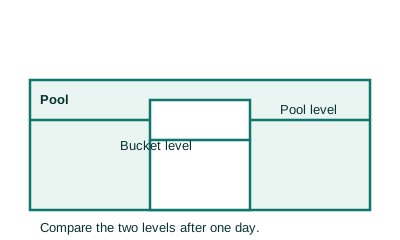
4. A pool that keeps losing water
Illustration: Bucket test comparing pool and bucket levels
Before: A pool loses water faster than normal, but some loss is normal evaporation. Draining the pool or digging up pipes without a test would waste water and money.
Method: The technician runs a bucket test to separate evaporation from a real leak, then pressure tests each line on its own to find which line loses pressure.
After: If the pool is only evaporating, no repair is needed. If one line fails, the search narrows to that line instead of the whole pool system.
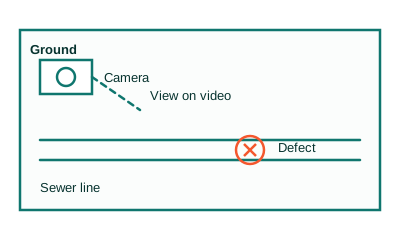
5. Slow drains and a sewer odor
Illustration: Camera inspection showing a defect inside the line
Before: Drains run slow and a sewer odor lingers, but the blockage or break could sit anywhere along the line. Digging to find it would disturb the yard and still might miss the defect.
Method: The technician sends a camera through an existing access point and watches the inside of the line on video, marking where roots, cracks, or offsets appear.
After: The defect is seen on video and its position is known. Any digging happens at that one place, after the cause is already clear.
Frequently Asked Questions
What is a slab leak?
A leak in the water or drain lines running beneath or inside your concrete foundation. Pressure-side leaks (supply lines) run continuously; drain-side leaks (wastewater lines) only leak when fixtures drain. Both are hidden by the slab itself.
What are the warning signs of a slab leak?
Warm spots on the floor, the sound of running water with everything off, unexplained bill spikes, damp flooring or mildew, low water pressure, and cracks or musty odors. Any one of these warrants investigation; two or more together are a strong signal.
What causes slab leaks?
In Alhambra the common causes are aging pipes (corroded galvanized, pinhole-prone copper), hard water accelerating corrosion, tree roots disturbing buried lines, high water pressure stressing weak joints, and soil or seismic movement flexing rigid pipe.
Can you find a slab leak without breaking the floor?
Yes, that is the entire point of professional detection. The sequence is meter check, pressure-test isolation, acoustic listening across the slab, and thermal confirmation. The floor is only opened at the single marked spot, if a repair requires it.
What should I do first if I suspect one?
Shut off your main water valve to stop the ongoing loss, photograph the symptoms and note when they started, and call for leak detection. Get the location confirmed before anyone discusses repair options.
How much water can a slab leak waste?
A great deal. The EPA has noted that even small household leaks can waste over 10,000 gallons per year, and a pressurized slab leak runs around the clock. The meter test during detection will show the scale of your loss.