South Pasadena lies just north of Alhambra, about three miles away, a city of established neighborhoods in the San Gabriel Valley. Wherever a home's plumbing has been in the ground for decades, pinhole leaks, joint failures, and corroded sections become a familiar story. When a bill climbs without explanation, a stain blooms on a ceiling, or a floor feels warm underfoot, a leak detection specialist finds the source without tearing the home apart to look for it.
Alhambra Leak Pros brings the full diagnostic toolkit to South Pasadena: acoustic listening for pressurized supply leaks, thermal imaging for hidden moisture in walls and ceilings, tracer gas for leaks that defeat every other method, and pressure testing to isolate the failing line. We mark the exact location and document our findings, so any repair work that follows is surgical, one opening, in the right place, the first time.
Service ZIP codes: We serve homes and businesses across South Pasadena, CA, including ZIP code 91030.
Last updated: October 13, 2026
About Leak Detection in South Pasadena
South Pasadena is a city in Los Angeles County, approximately three miles north of Alhambra. Our base next door means South Pasadena appointments schedule easily alongside our Alhambra work, with the same 24/7 availability for urgent calls. Common reasons South Pasadena owners call us: sudden bill increases, water stains on walls or ceilings, musty smells with no visible source, warm spots on flooring, and the sound of running water when every fixture is off.
What a South Pasadena visit looks like: we start with your symptoms and a walkthrough of the property, verify the leak with a meter check, then deploy the method the evidence points to, acoustic sensors on pipes and surfaces for pressurized leaks, thermal cameras for hidden moisture, tracer gas when a leak is too small or deep for other tools, and pressure testing to confirm the failing line. We combine methods whenever a location needs confirmation, then mark the exact spot and document everything. You get a clear answer the same day: where the leak is, how we found it, and what your contractor needs to know.
These are the signs South Pasadena owners call us about most:
Sudden, unexplained increases in the water bill
Water stains spreading on walls or ceilings
Persistent musty smells in rooms, closets, or hallways
Warm spots on flooring or tile
Running-water sounds with all fixtures off
Damp soil or greener grass in one patch of yard
Peeling paint or wallpaper near plumbing fixtures
A toilet that runs long after flushing
Services Available in South Pasadena
Every Alhambra Leak Pros service is available here, including:
How pinpointing changes the job: 5 illustrative examples
The examples below are illustrative. They show how pinpointing typically changes a job. They are not reports of specific customer jobs, and they name no customer, address, date, or price.
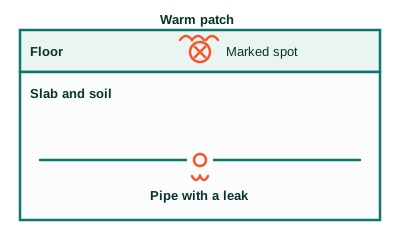
1. A warm spot on the floor
Illustration: Slab cross-section with one marked spot
Before: A homeowner notices one warm patch on the floor and a bill that keeps climbing, but no visible water. Without instruments, the only way to find the leak would be to open large areas of flooring and guess.
Method: The technician checks the meter, isolates the hot-water line, then combines thermal imaging with acoustic listening to follow the heat and sound to one point.
After: The leak is marked on the floor at one spot. Any repair opens that spot only, and the rest of the floor stays intact.
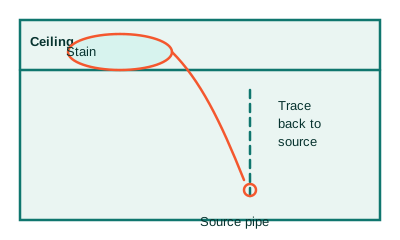
2. A stain on the ceiling
Illustration: Ceiling stain traced back to its source line
Before: A brown stain spreads across a ceiling, but the pipe above it may run several feet away. Opening the ceiling at the stain alone often misses the source and means opening more drywall later.
Method: The technician maps the damp area with thermal imaging and moisture readings, then checks pressure and nearby lines to trace the water back to its source.
After: The source line is identified and marked. Any opening is made where the leak actually is, not where the stain happens to show.
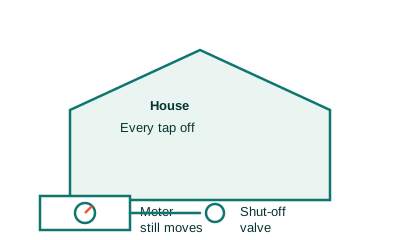
3. A meter that moves with everything off
Illustration: Meter test with every tap off
Before: Every tap is off, yet the water meter still moves. That proves water is leaving the system somewhere, but it says nothing about where. Digging or opening walls at this point would be pure guesswork.
Method: The technician runs a timed meter test, then isolates lines one by one with pressure checks to narrow the loss to a single line.
After: The search area shrinks from the whole property to one line. Pinpointing then focuses on that line only, before anything is opened.
4. A pool that keeps losing water
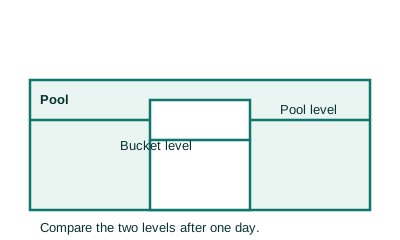
Illustration: Bucket test comparing pool and bucket levels
Before: A pool loses water faster than normal, but some loss is normal evaporation. Draining the pool or digging up pipes without a test would waste water and money.
Method: The technician runs a bucket test to separate evaporation from a real leak, then pressure tests each line on its own to find which line loses pressure.
After: If the pool is only evaporating, no repair is needed. If one line fails, the search narrows to that line instead of the whole pool system.
5. Slow drains and a sewer odor
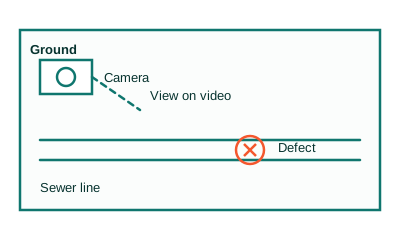
Illustration: Camera inspection showing a defect inside the line
Before: Drains run slow and a sewer odor lingers, but the blockage or break could sit anywhere along the line. Digging to find it would disturb the yard and still might miss the defect.
Method: The technician sends a camera through an existing access point and watches the inside of the line on video, marking where roots, cracks, or offsets appear.
After: The defect is seen on video and its position is known. Any digging happens at that one place, after the cause is already clear.
Frequently Asked Questions
Do you cover all of South Pasadena?
Yes. We serve homes and businesses throughout South Pasadena, as well as the surrounding cities, Pasadena, San Marino, Monterey Hills, and Alhambra.
How do you find a leak without opening up walls?
We work from the outside in: listening equipment on pipes and surfaces, thermal cameras that read temperature differences, tracer gas that escapes exactly where water escapes, and pressure tests that isolate the failing section. Walls and floors stay intact during detection.
How do you decide which detection method to use?
It depends on the symptoms. Warm spots and moisture patterns point toward thermal imaging; the sound of running water or a spinning meter points toward acoustic listening; tiny or elusive leaks may need tracer gas. Often we combine methods to confirm a location before we mark it.
What if I discover the leak at night?
Call +1 626-898-6221 any time, nights, weekends, and holidays included. We will talk you through immediate steps, like shutting off the main valve, and arrange the earliest available visit. We don't promise arrival times we can't keep.
Suspect a Hidden Leak? Don't Wait for the Damage.
Every day a hidden leak runs, the water bill climbs and the damage spreads. Call now, we answer 24 hours a day.