The water service line, the buried pipe carrying water from the meter to your house, is one of the longest pipes you own and the one you never see. When it leaks underground, the symptoms are indirect: a climbing water bill, a soggy patch in the yard, a strip of suspiciously lush grass, or the faint sound of running water with everything turned off.
Underground main line leak detection confirms the leak with your water meter, then traces the buried line with acoustic listening, pressure testing, and tracer gas to mark the breach's position on the surface. No exploratory trenches across the lawn, driveway, or walkway, one marked spot, ready for a targeted repair.
Last updated: October 13, 2026
Signs of an Underground Water Line Leak
A water bill that jumped 20–40% with no change in usage
A wet, soft, or sunken patch of ground when surrounding soil is dry
One strip of grass growing faster and greener than the rest
The water meter's leak indicator moves with all water turned off
Low water pressure at fixtures throughout the house
A faint hissing near the main shutoff with nothing running
The Meter Test: Confirm It Yourself
Before calling anyone, you can confirm an underground leak in about an hour. Turn off every fixture and appliance that uses water, or, more simply, close your main shutoff valve. Then look at the water meter: most have a small leak indicator, a triangle or star-shaped dial, that spins with even tiny flows. If it moves with everything off, water is escaping somewhere between the meter and your fixtures.
For a stronger test, record the meter reading, avoid all water use for one to two hours, and read it again. Any movement is proof of a leak. Also rule out the usual suspects first: a running toilet (food coloring in the tank will show it) and irrigation schedules. What remains is very often the buried service line.
Reading the Ground: What the Symptoms Mean
An underground leak leaves a signature on the surface if you know what to look for. A lush green strip following the pipe's route from meter to house is the classic sign, the leak is fertilizing one line of turf. Spongy or sunken soil, pooling water, or a depression forming in the yard means soil is eroding around the breach. In dry weather these signs stand out clearly against the surrounding ground.
Inside the house, the clues are a pressure drop across all fixtures and that faint hissing at the main shutoff, the sound of pressurized water escaping underground, transmitted up the pipe. Any one symptom is worth checking; two together make the diagnosis likely before we even arrive.
How Professionals Pinpoint a Buried Line Leak
Pinpointing starts with pressure testing to confirm the service line, rather than interior plumbing, is the culprit. Then acoustic listening takes the lead: a ground microphone sweeps the surface along the line's route, following the leak's sound to its loudest point. For deep lines, plastic pipe, or noisy locations, tracer gas provides the answer acoustics cannot.
The line's route itself is established first, from the meter box toward the house entry, so the search follows the pipe rather than wandering the yard. The outcome is a marked position on the surface, typically within a small area, with the depth estimated so any repair digs exactly where it should.
Who Is Responsible: You or the Utility?
A frequent question with a consistent answer: the homeowner is generally responsible for the service line from the water meter to the house, while the utility owns everything up to and including the meter. The meter box and curb stop are the utility's; the buried line on your side of the meter is yours to maintain.
This matters because it determines who pays for the repair, which is all the more reason to get the leak located precisely before any work begins. A marked, documented leak position also helps if you need to discuss the situation with your water provider or file an insurance claim.
Our Underground Main Line Leak Detection Process
Meter verification
We run a controlled no-use meter test to confirm water is escaping and estimate the loss rate.
Route establishment
The service line's path from meter to house entry is traced so the search follows the pipe.
Line confirmation
Pressure testing isolates the service line from interior plumbing to confirm it is the leaking section.
Acoustic or tracer pinpoint
Ground microphones, or tracer gas for deep, plastic, or noisy lines, narrow the breach to a marked surface position.
Mark and document
The location and estimated depth are marked and documented for a targeted, minimal repair excavation.
How pinpointing changes the job: 5 illustrative examples
The examples below are illustrative. They show how pinpointing typically changes a job. They are not reports of specific customer jobs, and they name no customer, address, date, or price.
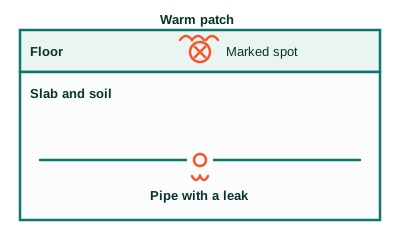
1. A warm spot on the floor
Illustration: Slab cross-section with one marked spot
Before: A homeowner notices one warm patch on the floor and a bill that keeps climbing, but no visible water. Without instruments, the only way to find the leak would be to open large areas of flooring and guess.
Method: The technician checks the meter, isolates the hot-water line, then combines thermal imaging with acoustic listening to follow the heat and sound to one point.
After: The leak is marked on the floor at one spot. Any repair opens that spot only, and the rest of the floor stays intact.
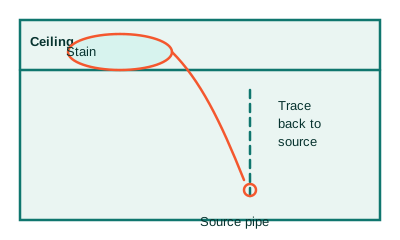
2. A stain on the ceiling
Illustration: Ceiling stain traced back to its source line
Before: A brown stain spreads across a ceiling, but the pipe above it may run several feet away. Opening the ceiling at the stain alone often misses the source and means opening more drywall later.
Method: The technician maps the damp area with thermal imaging and moisture readings, then checks pressure and nearby lines to trace the water back to its source.
After: The source line is identified and marked. Any opening is made where the leak actually is, not where the stain happens to show.
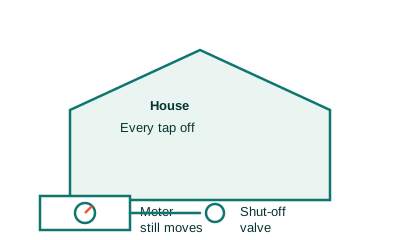
3. A meter that moves with everything off
Illustration: Meter test with every tap off
Before: Every tap is off, yet the water meter still moves. That proves water is leaving the system somewhere, but it says nothing about where. Digging or opening walls at this point would be pure guesswork.
Method: The technician runs a timed meter test, then isolates lines one by one with pressure checks to narrow the loss to a single line.
After: The search area shrinks from the whole property to one line. Pinpointing then focuses on that line only, before anything is opened.
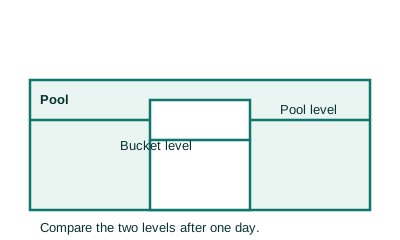
4. A pool that keeps losing water
Illustration: Bucket test comparing pool and bucket levels
Before: A pool loses water faster than normal, but some loss is normal evaporation. Draining the pool or digging up pipes without a test would waste water and money.
Method: The technician runs a bucket test to separate evaporation from a real leak, then pressure tests each line on its own to find which line loses pressure.
After: If the pool is only evaporating, no repair is needed. If one line fails, the search narrows to that line instead of the whole pool system.
5. Slow drains and a sewer odor
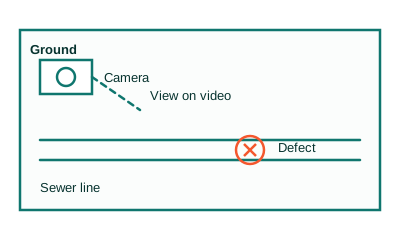
Illustration: Camera inspection showing a defect inside the line
Before: Drains run slow and a sewer odor lingers, but the blockage or break could sit anywhere along the line. Digging to find it would disturb the yard and still might miss the defect.
Method: The technician sends a camera through an existing access point and watches the inside of the line on video, marking where roots, cracks, or offsets appear.
After: The defect is seen on video and its position is known. Any digging happens at that one place, after the cause is already clear.
Frequently Asked Questions
How do I confirm an underground leak with my water meter?
Turn off all water (or close the main valve) and watch the meter's leak indicator, a small triangle or dial that spins with any flow. If it moves, water is escaping. Alternatively, record the reading, wait one to two hours with zero usage, and compare. Movement means a leak.
What are the first signs of an underground water line leak?
An unexplained bill increase, a wet or sunken patch of ground, a strip of unusually green fast-growing grass along the pipe route, low water pressure, or the sound of running water with everything off. Any combination of these deserves a meter test.
Can I find the exact leak location myself?
You can confirm you have one and roughly which area it is in, but reliable pinpointing needs professional equipment: acoustic ground microphones, tracer gas, and pressure testing. DIY digging on a guess is how yards get destroyed without finding the leak.
What does a sudden bill spike mean?
A 20–40% usage jump with no routine change strongly suggests a leak, and when no fixture or toilet is the cause, the buried service line is the prime suspect. The meter test distinguishes a real leak from a billing error.
Is this the same as a slab leak?
No. This page covers the buried service line outdoors, meter to house, under the yard or driveway. A slab leak is in the lines beneath your concrete foundation. The detection methods overlap, but the location, and the repair approach, differ.
Do you also fix the line once found?
Our role is detection: confirming the leak and marking its precise position and depth. That marked location is what lets any repair, by the plumber or contractor you choose, excavate one targeted spot instead of trenching the whole line.