
Every pool loses some water to evaporation, especially in Southern California heat, so a dropping water level does not automatically mean a leak. But it might. The difference matters: evaporation is free and normal, while a leak wastes water around the clock and can undermine decking, equipment, and the pool shell itself. Fortunately, there is a simple test that settles the question in about twenty-four hours.
Last updated: October 13, 2026
How much water loss in a pool is normal?
Some evaporation is always happening, and the rate varies with heat, wind, humidity, and how much the pool is used. Splash-out, backwashing the filter, and drips at the equipment pad can also drop the level without any structural leak. As a rule of thumb, if you are refilling noticeably more often than usual for the season, or the level drops visibly day after day, it is worth testing rather than assuming it is the weather. Do not rely on memory; measure. Mark the level and check it at the same time each day for a few days to establish what is actually happening.
How do you do a bucket test for a pool leak?
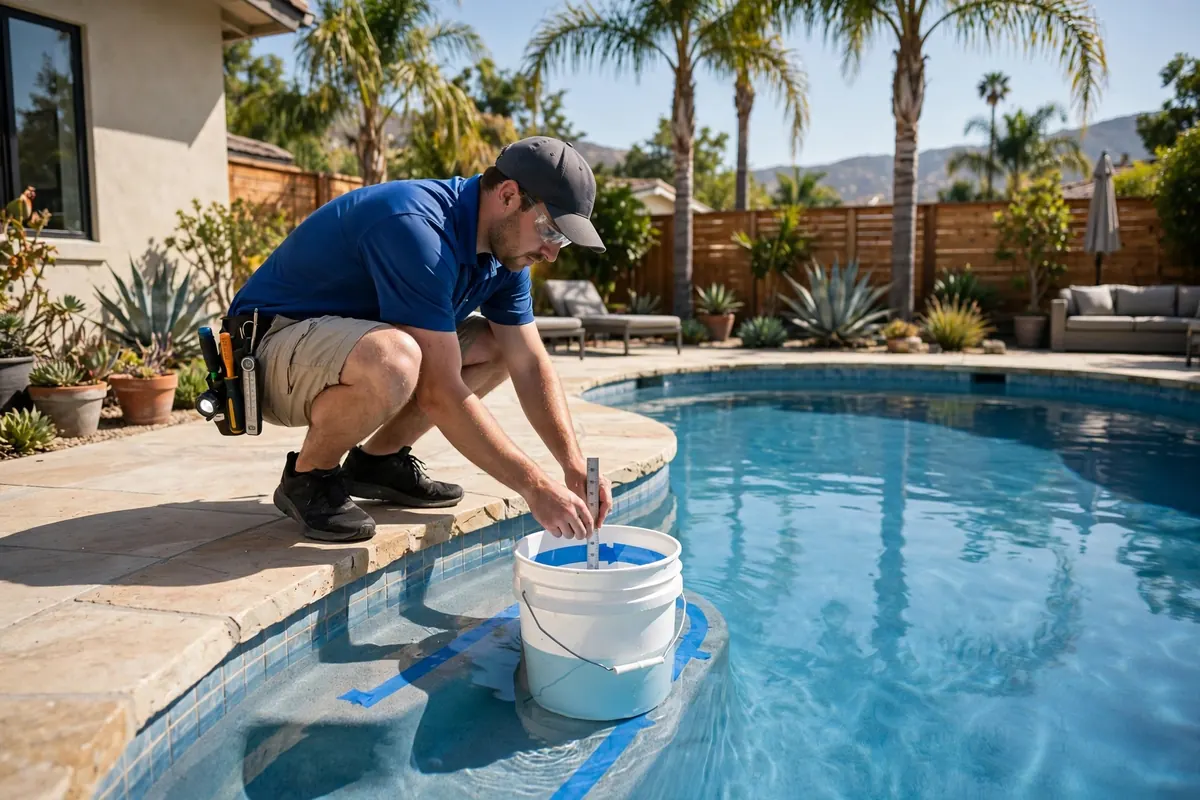
The bucket test isolates evaporation from leaking with elegant simplicity. Here is how to run it properly:
1. Fill a bucket with pool water and set it on a pool step, so the water level inside the bucket roughly matches the pool's level.
2. Mark the water level inside the bucket and the pool's level on the tile line, painter's tape works well for both.
3. Turn the pump off for this first test. (Plumbing leaks often only show with the system running, so a second test with the pump on can come later, but start simple.)
4. Wait twenty-four hours without swimming, splashing, or backwashing.
5. Compare the two marks. If the pool dropped significantly more than the bucket, water is leaving somewhere other than evaporation, you likely have a leak. If both dropped by about the same amount, it is evaporation.
If the first test is inconclusive, repeat it with the pump running: a leak that only appears with the system on points to the plumbing or equipment rather than the shell, useful information for whatever comes next.
What is the most common cause of pool leaks?
- Skimmer and return fittings, the seals where fittings meet the shell are the single most frequent leak point.
- Underground plumbing, cracked or separated lines serving the skimmer, returns, main drain, or cleaner line.
- Light niches and conduit, water migrates through light conduits more often than owners expect.
- Structural cracks, in the shell, coping, or tile line, especially where ground movement has occurred.
- The equipment pad, pump seals, filter connections, and heater unions can drip steadily and are easy to overlook because they are out of sight behind equipment.
Does a pool leak get worse over time?
Almost always. A leaking fitting rarely seals itself, and water escaping under pressure gradually erodes the surrounding soil or backfill, which can open the leak further and, in some cases, cause decking or coping to settle and crack. Meanwhile the autofill (if you have one) masks the loss by topping the pool up constantly, so the water bill climbs while the visible level looks fine. The pattern is consistent: the longer a pool leak runs, the more water it wastes and the more collateral repair it creates. Early detection is the cheap version of this story.
When should I call a professional for a pool leak?
Call when the bucket test points to a leak, or when you can see the level dropping but cannot find where it is going. Professional pool leak detection goes well beyond the bucket: pressure testing isolates each plumbing line individually to identify the leaking one, dye testing traces cracks and fitting leaks with the pump off, and electro-acoustic listening pinpoints underground pipe leaks without digging up the deck. The sooner a leak is located, the less water it wastes, and the less collateral damage it does to the surrounding structure.
If your Alhambra pool is losing water and the bucket test says it is more than evaporation, our pool and spa leak detection service will find exactly where it is going. Call +1 626-898-6221, we are open 24 hours.
Related service: Pool and Spa Leak Detection in Alhambra, CA
How pinpointing changes the job: 5 illustrative examples
The examples below are illustrative. They show how pinpointing typically changes a job. They are not reports of specific customer jobs, and they name no customer, address, date, or price.
1. A warm spot on the floor
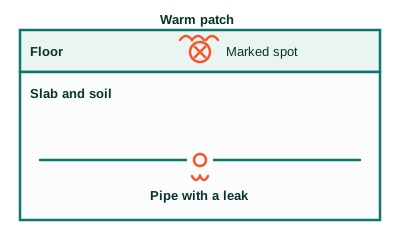
Before: A homeowner notices one warm patch on the floor and a bill that keeps climbing, but no visible water. Without instruments, the only way to find the leak would be to open large areas of flooring and guess.
Method: The technician checks the meter, isolates the hot-water line, then combines thermal imaging with acoustic listening to follow the heat and sound to one point.
After: The leak is marked on the floor at one spot. Any repair opens that spot only, and the rest of the floor stays intact.
2. A stain on the ceiling
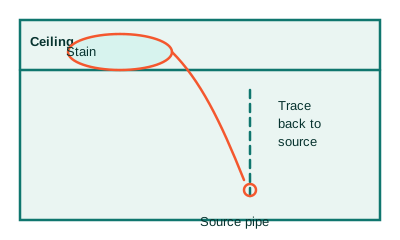
Before: A brown stain spreads across a ceiling, but the pipe above it may run several feet away. Opening the ceiling at the stain alone often misses the source and means opening more drywall later.
Method: The technician maps the damp area with thermal imaging and moisture readings, then checks pressure and nearby lines to trace the water back to its source.
After: The source line is identified and marked. Any opening is made where the leak actually is, not where the stain happens to show.
3. A meter that moves with everything off
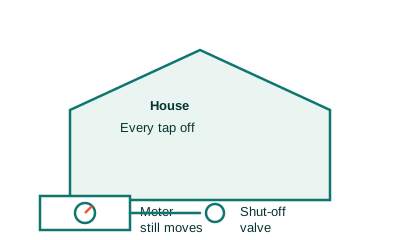
Before: Every tap is off, yet the water meter still moves. That proves water is leaving the system somewhere, but it says nothing about where. Digging or opening walls at this point would be pure guesswork.
Method: The technician runs a timed meter test, then isolates lines one by one with pressure checks to narrow the loss to a single line.
After: The search area shrinks from the whole property to one line. Pinpointing then focuses on that line only, before anything is opened.
4. A pool that keeps losing water
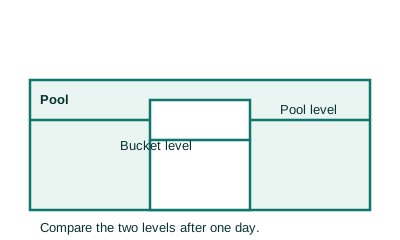
Before: A pool loses water faster than normal, but some loss is normal evaporation. Draining the pool or digging up pipes without a test would waste water and money.
Method: The technician runs a bucket test to separate evaporation from a real leak, then pressure tests each line on its own to find which line loses pressure.
After: If the pool is only evaporating, no repair is needed. If one line fails, the search narrows to that line instead of the whole pool system.
5. Slow drains and a sewer odor
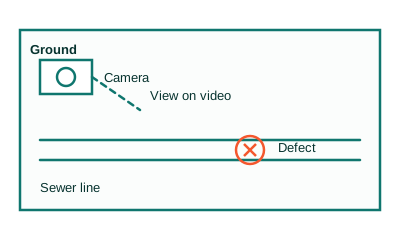
Before: Drains run slow and a sewer odor lingers, but the blockage or break could sit anywhere along the line. Digging to find it would disturb the yard and still might miss the defect.
Method: The technician sends a camera through an existing access point and watches the inside of the line on video, marking where roots, cracks, or offsets appear.
After: The defect is seen on video and its position is known. Any digging happens at that one place, after the cause is already clear.