
Most water leaks do not announce themselves with a puddle. They hide inside walls, under slabs, and beneath yards, quietly raising your water bill and feeding damage for weeks or months. In Alhambra, where the majority of homes are decades old and running on original plumbing, knowing the early warning signs is the difference between a one-visit detection and a major repair.
Last updated: October 13, 2026
Why Alhambra Homes Are Especially Vulnerable
The city's own housing plan notes that over 80% of Alhambra's housing stock is at least 30 years old. That age shows up in the pipes: galvanized steel from the 1930s–60s corrodes from the inside out, cast iron from the 1940s–70s separates at its joints, and copper from the 1960s onward develops pinhole leaks. None of these failures start with a visible flood, they start as slow, hidden losses. That is why the signs below matter more here than in a newer suburb.
1. Your water bill climbs for no reason
The single most common first sign. If usage habits have not changed and the bill keeps rising across two or more billing periods, water is going somewhere you cannot see. Rule out the obvious first, a running toilet (drop food coloring in the tank; color in the bowl without flushing means the flapper leaks) and irrigation schedules, then treat a still-rising bill as a leak until proven otherwise.
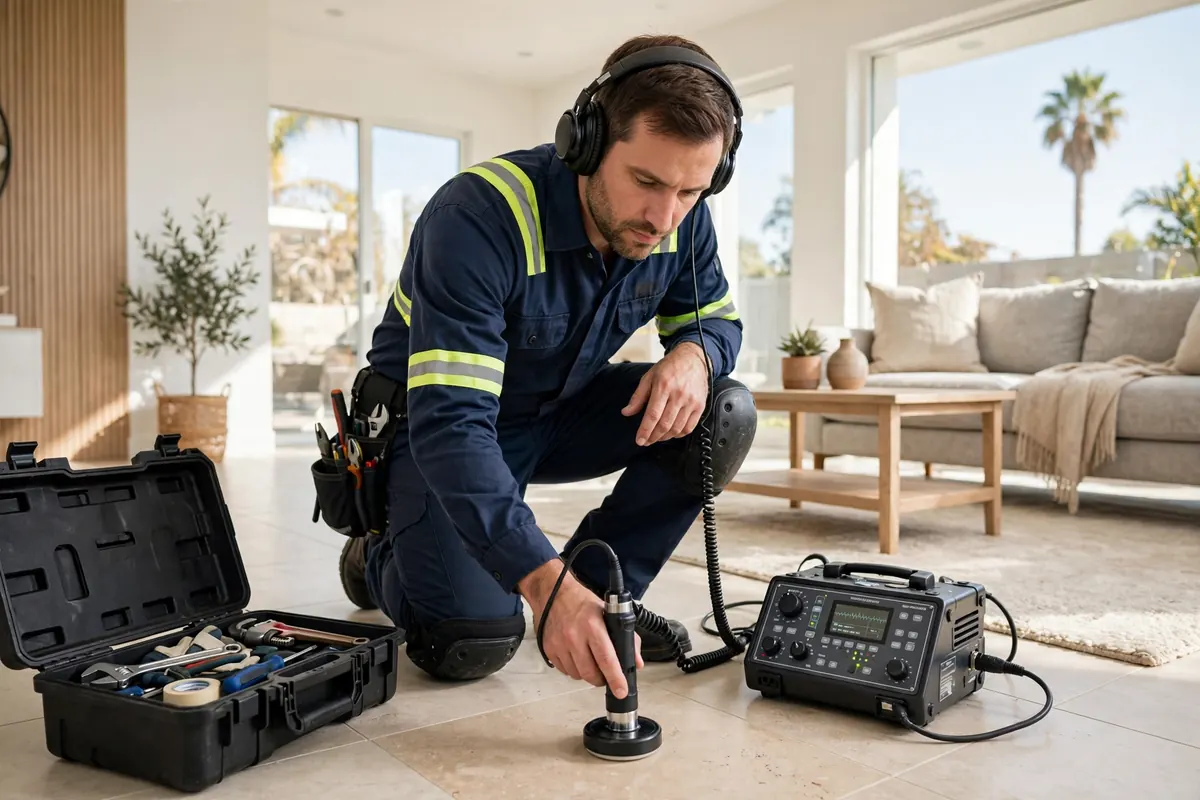
2. The water meter moves when nothing is running
This is the definitive home test, and the same first check professionals run. Turn off every fixture, ice maker, and irrigation zone. Write down the meter reading (including the small dial or numbers), wait two hours without using any water, then read it again. Any movement at all means water is escaping the system somewhere between the meter and your fixtures.
3. You hear water when everything is off
Stand quietly near walls, floors, and the water heater with all fixtures off. A faint hiss, whoosh, or the sound of running water is the signature of a pressurized line leaking, the exact sound acoustic detection equipment is designed to trace. Note where it sounds loudest; that detail helps the technician.
4. Warm spots on the floor
A hot-water line leaking under a slab warms the concrete above it. Walk barefoot across tile or hard flooring: one patch feeling noticeably warmer than its surroundings is a classic slab-leak indicator. Cold spots or persistently damp-feeling areas deserve the same attention.
5. Damp, musty, or discolored areas
Peeling paint, warped baseboards, a musty smell in a closet, or a stain that returns after repainting all point to moisture behind the surface. Water travels along pipes, joists, and wall cavities before it shows itself, the stain is rarely directly below the leak, which is why tracing it takes instruments, not guesses.
6. Low water pressure
A leak diverts pressure before it diverts your attention. If one fixture has gradually weakened, the problem may be local; if the whole house has lost pressure over time, a supply-line leak is a prime suspect. Compare with neighbors, if theirs is fine, the issue is inside your property lines.
7. Lush patches or soggy soil in the yard
One section of lawn growing faster and greener than the rest, soil that stays soft days after watering, or even a patch of pavement that never fully dries often marks an underground service-line leak between the meter and the house. Before assuming the worst, check that a sprinkler head isn't stuck on, then run the meter test.
What to do next
If two or more of these sound familiar, run the two-hour meter test today, it costs nothing and settles the question. If the meter moves, the next step is professional detection: acoustic listening and thermal imaging can pinpoint the source without opening a single wall, and the location gets marked so any repair is one precise opening. Call +1 626-898-6221, we are open 24 hours, and we will tell you honestly whether a detection visit is warranted.
What you can check yourself, and when to call a pro
You can safely do the first checks yourself: the two-hour meter test, listening for running water with all fixtures off, and looking for stains, warm spots, or soggy soil. Write down what you find, since those details help the technician choose the right methods.
Leave pinpointing to a pro. Pressurized lines, slab lines, and anything behind walls need instruments, and opening walls or concrete on a guess usually causes more damage than the leak. If you see major flooding or water near electrics, shut off the main, stay clear of wet outlets, and call for help.
Related service: Acoustic Leak Detection in Alhambra, CA
How pinpointing changes the job: 5 illustrative examples
The examples below are illustrative. They show how pinpointing typically changes a job. They are not reports of specific customer jobs, and they name no customer, address, date, or price.
1. A warm spot on the floor
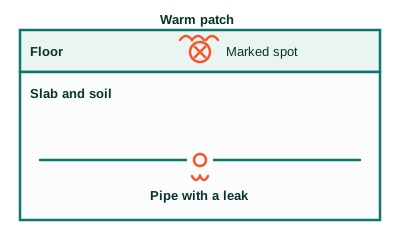
Before: A homeowner notices one warm patch on the floor and a bill that keeps climbing, but no visible water. Without instruments, the only way to find the leak would be to open large areas of flooring and guess.
Method: The technician checks the meter, isolates the hot-water line, then combines thermal imaging with acoustic listening to follow the heat and sound to one point.
After: The leak is marked on the floor at one spot. Any repair opens that spot only, and the rest of the floor stays intact.
2. A stain on the ceiling
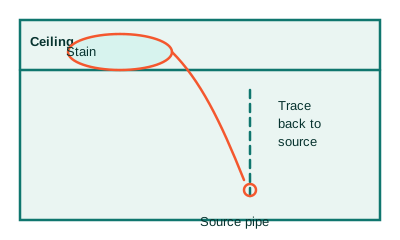
Before: A brown stain spreads across a ceiling, but the pipe above it may run several feet away. Opening the ceiling at the stain alone often misses the source and means opening more drywall later.
Method: The technician maps the damp area with thermal imaging and moisture readings, then checks pressure and nearby lines to trace the water back to its source.
After: The source line is identified and marked. Any opening is made where the leak actually is, not where the stain happens to show.
3. A meter that moves with everything off
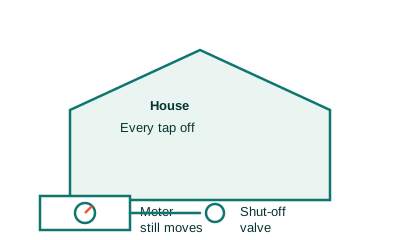
Before: Every tap is off, yet the water meter still moves. That proves water is leaving the system somewhere, but it says nothing about where. Digging or opening walls at this point would be pure guesswork.
Method: The technician runs a timed meter test, then isolates lines one by one with pressure checks to narrow the loss to a single line.
After: The search area shrinks from the whole property to one line. Pinpointing then focuses on that line only, before anything is opened.
4. A pool that keeps losing water
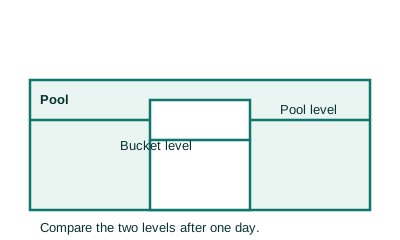
Before: A pool loses water faster than normal, but some loss is normal evaporation. Draining the pool or digging up pipes without a test would waste water and money.
Method: The technician runs a bucket test to separate evaporation from a real leak, then pressure tests each line on its own to find which line loses pressure.
After: If the pool is only evaporating, no repair is needed. If one line fails, the search narrows to that line instead of the whole pool system.
5. Slow drains and a sewer odor
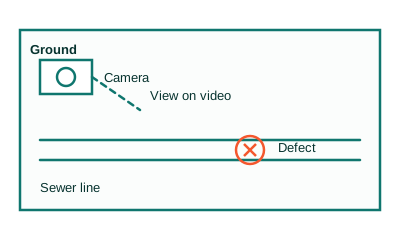
Before: Drains run slow and a sewer odor lingers, but the blockage or break could sit anywhere along the line. Digging to find it would disturb the yard and still might miss the defect.
Method: The technician sends a camera through an existing access point and watches the inside of the line on video, marking where roots, cracks, or offsets appear.
After: The defect is seen on video and its position is known. Any digging happens at that one place, after the cause is already clear.