
A brownish stain spreading across the ceiling or down a wall is one of the most common, and most misdiagnosed, signs of a water problem. The instinct is to paint over it. The problem is that the stain is a symptom, not the disease: until the source is found and stopped, the stain always comes back, and the hidden damage keeps growing behind the paint. Here is how to think like a leak detective and trace the stain to its source.
Last updated: October 13, 2026
Does a water stain on the ceiling always mean a roof leak?
No, and assuming so is the most common and most expensive mistake. The single most useful diagnostic tool you own is timing:
- The stain grows or darkens only during and after rain, points to the roof, flashing, or exterior water intrusion.
- The stain is constant or grows steadily regardless of weather, points to plumbing: a supply line, drain line, or fixture in the space above.
- The stain appears seasonally or with humidity, can point to condensation, especially around poorly insulated ductwork or cold-water lines.
Keep a simple log for a week or two: when does the stain look worse, and what was the weather doing? That log is genuinely useful to a detection specialist, and it costs you nothing.
How do you trace a leak back to its source?
Water rarely stains directly below its source, it travels along joists, pipes, and framing before it finds a weak spot to surface. Work through it methodically:
1. Map the stain's edges. Note the full extent, including faint discoloration at the margins, the source is usually uphill or upstream of the worst area, not beneath it.
2. Look above. What sits directly over the stain? A bathroom, a water heater, an HVAC air handler, or just roof and attic? The answer narrows the suspects enormously.
3. Test with timing. Run the shower or flush the toilet above and watch whether the stain darkens or drips within minutes, that implicates a drain or supply line serving that fixture. No change after heavy fixture use points away from plumbing.
4. Feel and measure. Press gently for softness in the drywall and check for dampness, this distinguishes an active leak from an old, dried stain left by a problem that was already fixed.
5. Bring in thermal imaging. An infrared camera reveals the moisture's full spread behind the surface, often much larger than the visible stain, and helps pinpoint the entry point without opening the wall blindly.
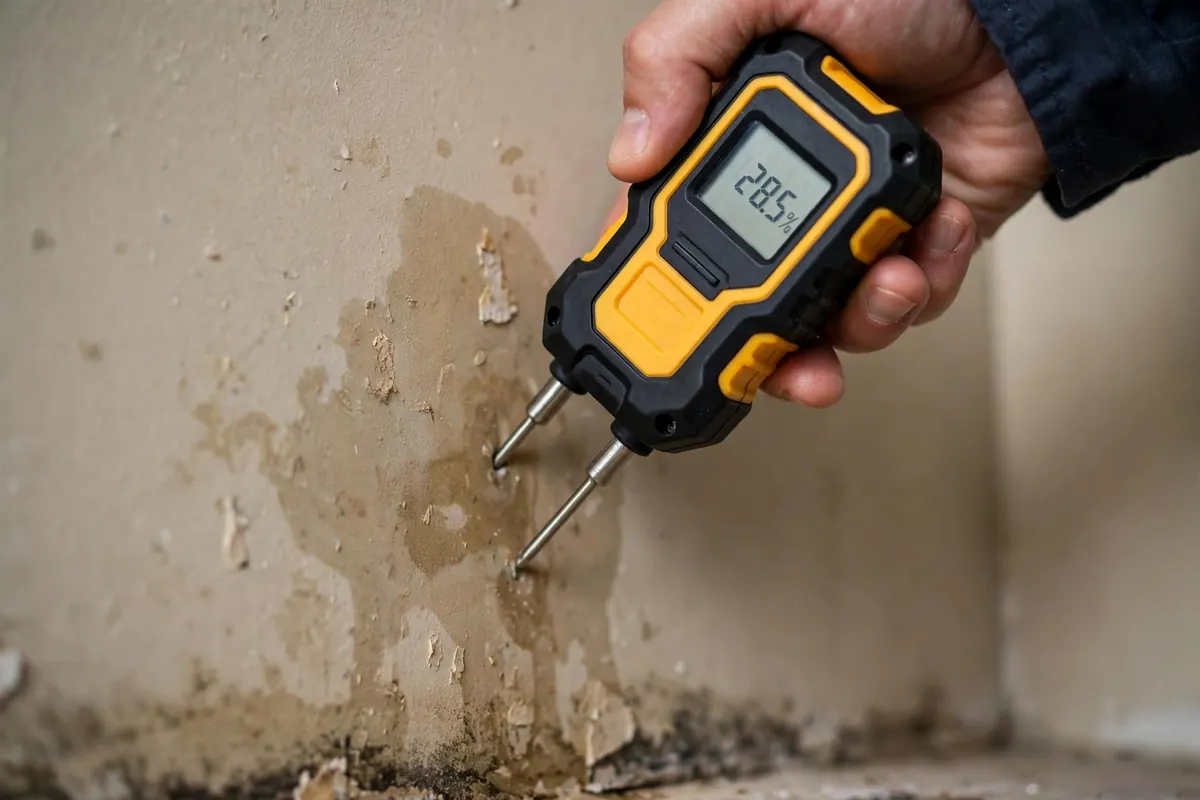
What does the color of a water stain tell you?
Stain appearance offers rough clues. A yellowish or brown ring with a darker border often marks an old, dried event, water arrived, then stopped. A dark, spreading stain that feels damp or cool is usually active. Multiple concentric rings suggest repeated wetting and drying cycles over time, the leak comes and goes. These are clues, not conclusions: only a moisture reading confirms whether the area is wet right now, which is what determines urgency.
Why does a water stain keep coming back after painting?
Because paint seals the symptom, not the source. Water-soluble staining compounds in drywall and wood bleed through new paint within weeks if moisture is still arriving. Worse, painting over an active leak hides your only warning sign while mold and rot continue behind the surface. If a stain has survived two coats of paint, stop painting and start investigating, the paint is now the most expensive part of the problem.
Is a ceiling water stain an emergency?
Sometimes. Treat it as urgent if the stain is actively dripping, growing visibly day to day, the drywall is bulging or sagging (saturated drywall can collapse), or there is any sign water is near electrical fixtures, in that case turn off power to the area and do not touch wet switches or outlets. A small, stable, long-dry stain can usually wait for a scheduled visit, but "stable" should be verified with a moisture check, not assumed from appearance.
If a stain keeps returning in your Alhambra home, our wall and ceiling leak detection service traces it to the source, timing analysis, moisture mapping, and thermal imaging included, before a single wall is opened. Call +1 626-898-6221; we are open 24 hours.
Related service: Wall and Ceiling Leak Detection in Alhambra, CA
How pinpointing changes the job: 5 illustrative examples
The examples below are illustrative. They show how pinpointing typically changes a job. They are not reports of specific customer jobs, and they name no customer, address, date, or price.
1. A warm spot on the floor
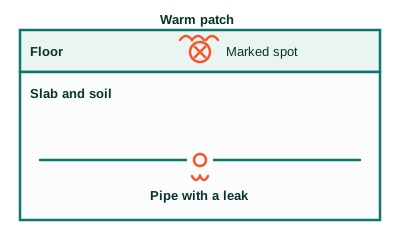
Before: A homeowner notices one warm patch on the floor and a bill that keeps climbing, but no visible water. Without instruments, the only way to find the leak would be to open large areas of flooring and guess.
Method: The technician checks the meter, isolates the hot-water line, then combines thermal imaging with acoustic listening to follow the heat and sound to one point.
After: The leak is marked on the floor at one spot. Any repair opens that spot only, and the rest of the floor stays intact.
2. A stain on the ceiling
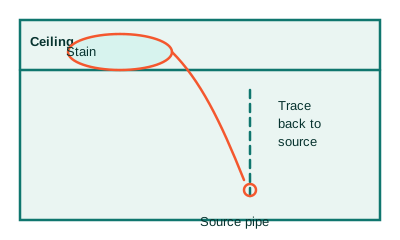
Before: A brown stain spreads across a ceiling, but the pipe above it may run several feet away. Opening the ceiling at the stain alone often misses the source and means opening more drywall later.
Method: The technician maps the damp area with thermal imaging and moisture readings, then checks pressure and nearby lines to trace the water back to its source.
After: The source line is identified and marked. Any opening is made where the leak actually is, not where the stain happens to show.
3. A meter that moves with everything off
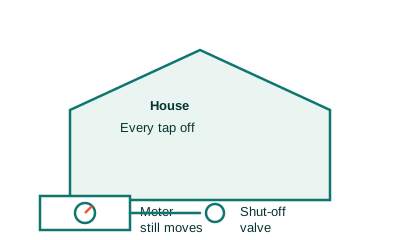
Before: Every tap is off, yet the water meter still moves. That proves water is leaving the system somewhere, but it says nothing about where. Digging or opening walls at this point would be pure guesswork.
Method: The technician runs a timed meter test, then isolates lines one by one with pressure checks to narrow the loss to a single line.
After: The search area shrinks from the whole property to one line. Pinpointing then focuses on that line only, before anything is opened.
4. A pool that keeps losing water
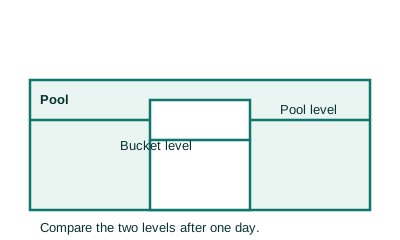
Before: A pool loses water faster than normal, but some loss is normal evaporation. Draining the pool or digging up pipes without a test would waste water and money.
Method: The technician runs a bucket test to separate evaporation from a real leak, then pressure tests each line on its own to find which line loses pressure.
After: If the pool is only evaporating, no repair is needed. If one line fails, the search narrows to that line instead of the whole pool system.
5. Slow drains and a sewer odor
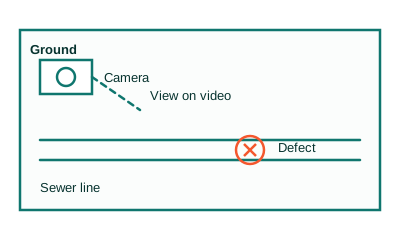
Before: Drains run slow and a sewer odor lingers, but the blockage or break could sit anywhere along the line. Digging to find it would disturb the yard and still might miss the defect.
Method: The technician sends a camera through an existing access point and watches the inside of the line on video, marking where roots, cracks, or offsets appear.
After: The defect is seen on video and its position is known. Any digging happens at that one place, after the cause is already clear.