
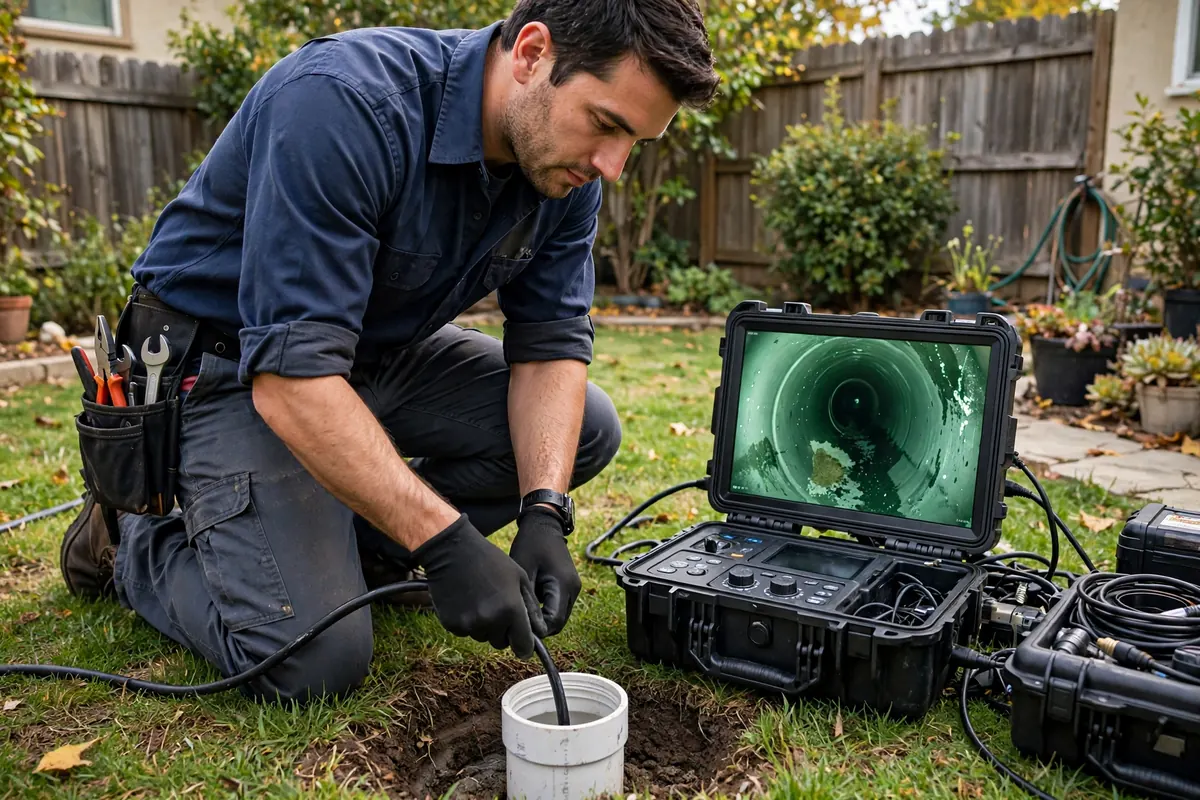
A sewer camera inspection is exactly what it sounds like: a waterproof camera on the end of a flexible cable, pushed through your drain or sewer line, sending live video back to a monitor above ground. It has become one of the most useful diagnostic tools in plumbing, and one of the most misunderstood. Here is what the camera can actually show you, and where its limits lie.
Last updated: October 13, 2026
What problems can a sewer camera find?
- Tree root intrusion, roots enter through joints and cracks; the camera shows exactly where and how severely.
- Cracks and fractures, from ground movement, age, or corrosion.
- Pipe bellies (sags), low sections where waste collects instead of flowing away.
- Offset or separated joints, sections of pipe that have shifted apart over time.
- Blockages and buildup, grease, scale, or foreign objects narrowing the line.
- Corrosion and deterioration, especially in older cast iron and clay lines.
- The line's material, depth, and direction, the camera's locator beacon lets the technician mark the pipe's path and depth from above ground, which is invaluable when planning any future work.
In Alhambra, where mature trees line many streets and older homes still run on clay or cast iron laterals, root intrusion and age-related deterioration are the two findings that come up most often.
Can a sewer camera see a leak?
This is the honest-limits part, and it matters. A camera shows the condition of the pipe, cracks, holes, separations, root masses, but it does not show water escaping, because the camera sits inside a gravity drain line, not a pressurized water line. A visible crack is strong evidence of a problem, but the camera is documenting damage, not the leak itself. For pressurized supply lines, different tools do the locating, acoustic listening and pressure testing, while the camera owns the drain and sewer side. Knowing which tool fits which pipe is half the battle.
How long does a sewer camera inspection take?
Most residential inspections are completed within about an hour or two, depending on the length of the line, how many access points exist, and whether the line needs clearing first. A camera can only travel as far as the pipe allows, if a severe blockage stops it, the line usually needs to be cleared before the inspection can continue. You should receive a copy of the video along with a written summary of findings, which is useful for getting repair quotes or sharing with a contractor.
Is a sewer camera inspection safe for my pipes?
Yes. The camera is designed for this exact job, a smooth, rounded head on a flexible cable that glides through the line without scraping or catching. It is inserted through an existing access point such as a cleanout, so no digging or disassembly is needed for the inspection itself. The only caveat: if the line is severely blocked, the camera can only travel as far as the blockage, and the line may need clearing first. The inspection itself does not damage pipes.
Should I get a sewer scope when buying a house?
In the Los Angeles area, a pre-purchase sewer scope has become standard advice from home inspectors and real estate agents, and for good reason. A general home inspection does not look inside the sewer lateral, yet a failed line is one of the most expensive surprises a buyer can inherit. If you are buying an older Alhambra home, a sewer camera inspection before closing tells you exactly what you are buying underground: the pipe's material, its condition, and whether roots or bellies will demand attention soon. It is a small inspection that can prevent a very large surprise.
What a sewer camera can't do
- It cannot see through pipe walls or inspect the soil and conditions outside the pipe.
- It cannot navigate a fully collapsed or heavily blocked section, the line must be passable.
- It cannot inspect lines it cannot reach. Without an accessible cleanout or entry point, access may need to be created first.
- It diagnoses; it does not fix. The video tells you what is wrong and precisely where, the repair is a separate decision you can then make with full information.
If slow drains, gurgling, or a home purchase have you wondering about your sewer line, a video camera pipe inspection gives you eyes inside the pipe. Call +1 626-898-6221, we are open 24 hours.
Related service: Video Camera Pipe Inspection in Alhambra, CA
How pinpointing changes the job: 5 illustrative examples
The examples below are illustrative. They show how pinpointing typically changes a job. They are not reports of specific customer jobs, and they name no customer, address, date, or price.
1. A warm spot on the floor
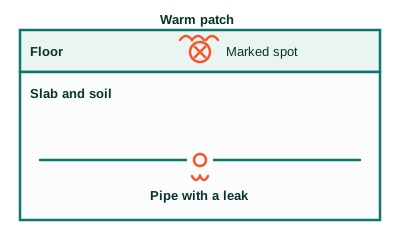
Before: A homeowner notices one warm patch on the floor and a bill that keeps climbing, but no visible water. Without instruments, the only way to find the leak would be to open large areas of flooring and guess.
Method: The technician checks the meter, isolates the hot-water line, then combines thermal imaging with acoustic listening to follow the heat and sound to one point.
After: The leak is marked on the floor at one spot. Any repair opens that spot only, and the rest of the floor stays intact.
2. A stain on the ceiling
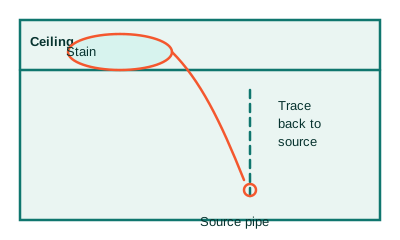
Before: A brown stain spreads across a ceiling, but the pipe above it may run several feet away. Opening the ceiling at the stain alone often misses the source and means opening more drywall later.
Method: The technician maps the damp area with thermal imaging and moisture readings, then checks pressure and nearby lines to trace the water back to its source.
After: The source line is identified and marked. Any opening is made where the leak actually is, not where the stain happens to show.
3. A meter that moves with everything off
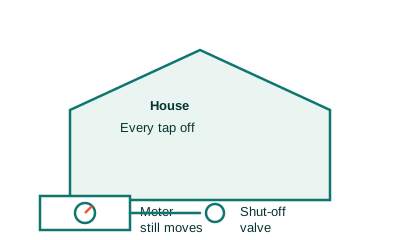
Before: Every tap is off, yet the water meter still moves. That proves water is leaving the system somewhere, but it says nothing about where. Digging or opening walls at this point would be pure guesswork.
Method: The technician runs a timed meter test, then isolates lines one by one with pressure checks to narrow the loss to a single line.
After: The search area shrinks from the whole property to one line. Pinpointing then focuses on that line only, before anything is opened.
4. A pool that keeps losing water
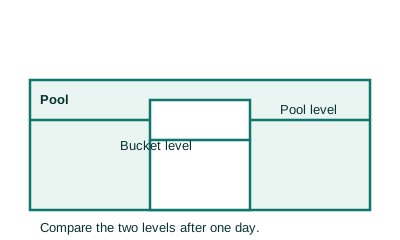
Before: A pool loses water faster than normal, but some loss is normal evaporation. Draining the pool or digging up pipes without a test would waste water and money.
Method: The technician runs a bucket test to separate evaporation from a real leak, then pressure tests each line on its own to find which line loses pressure.
After: If the pool is only evaporating, no repair is needed. If one line fails, the search narrows to that line instead of the whole pool system.
5. Slow drains and a sewer odor
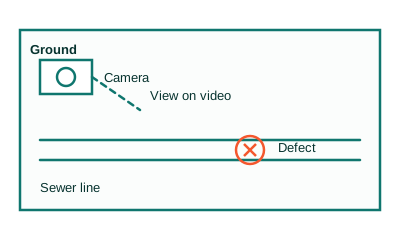
Before: Drains run slow and a sewer odor lingers, but the blockage or break could sit anywhere along the line. Digging to find it would disturb the yard and still might miss the defect.
Method: The technician sends a camera through an existing access point and watches the inside of the line on video, marking where roots, cracks, or offsets appear.
After: The defect is seen on video and its position is known. Any digging happens at that one place, after the cause is already clear.